
Caring for a loved one at the end of life is never easy, especially when you notice changes in their appetite or thirst. It’s natural to worry, but these changes are a normal part of the dying process.
Most hospice patients need very little food or water as their bodies slow down. Research shows that artificial nutrition and hydration rarely improve comfort or survival at this stage.
As a caregiver, your support and presence matter most—there are many ways to show love beyond meals.
Helpful links:
- Tìm Nhóm hỗ trợ
- Learn About Anticipatory Grief
Why do hospice patients stop eating or drinking?
As your loved one nears the end of life, their body goes through natural changes. It’s common for appetite and thirst to fade, and this isn’t a sign of suffering when symptoms are well managed.
Common reasons include:
Learning the signs of active dying can help prepare you for what to expect and when appetite and thirst typically declines.
How does hospice manage declining thirst and appetite in end-of-life patients?
The hospice care team does not force food or water and usually does not initiate or escalate artificial feeding when it is unlikely to help and may cause discomfort.
Người bệnh gần đất xa trời, những người đang được cho ăn qua phương thức nhân tạo có thể bị nôn ọe, những biến chứng từ ống xông (vd. bị tắc nghẽn hoặc nhiễm trùng), khó chịu, viêm phổi do hít phải, lở loét do nằm quá lâu, đầy hơi, cảm giác “chết đuối” hoặc có cảm giác bị “mắc kẹt”.
Hơn nữa, các nghiên cứu cho thấy cấp dinh dưỡng nhân tạo có tác động rất nhỏ tới sự sống của bệnh nhân được chăm sóc cuối đời. Ví dụ, các nghiên cứu cho thấy không có sự khác biệt nào về khoảng thời gian sống còn lại theo dự kiến giữa các bệnh nhân mắc bệnh mất trí nhớ đang được cho ăn qua ống xông và những người được đút cho ăn từ từ. Comfort feeding, by hand, is encouraged, as tolerated.
The challenge of feeding tubes
Dịch vụ chăm sóc cuối đời sẽ không bị từ chối đối với bệnh nhân đang có sẵn ống xông. The hospice team will work closely with the patient, family and caregiver to discuss care goals. Về mặt kỹ thuật người ta có thể rút ống xông nhưng thường thì quyết định đưa ra chỉ là dừng sử dụng chúng.
Feeding tubes typically are not placed in a patient when death is imminent. Nhưng người ta sẽ thực hiện tất cả các bước cần thiết nhằm đảm bảo sự thoải mái và giảm đau cho bệnh nhân khi giai đoạn cuối đời đến gần kề. In rare circumstances, the VITAS team might administer IV fluids temporarily to prevent dehydration or provide comfort.
When is the right time to stop feeding a hospice patient?
Nhu cầu về thức ăn và nước uống của một bệnh nhân đến thời điểm cuối của cuộc đời rất khác so với những người khỏe mạnh, còn hoạt động bình thường. Khi cận kề cái chết, cơ thể dần mất đi khả năng tiêu hóa, xử lý thức ăn và nước uống. Khi các bộ phận và chức năng cơ thể dừng hoạt động, cơ thể con người có thể chỉ cần dinh dưỡng và/hoặc cấp nước/dịch ở mức tối thiểu, nếu có.
The patient’s appetite and thirst will determine when to stop providing food and water.
VITAS always works with patients and families to develop individualized care plans that support the patient’s wishes and values, and those plans include a discussion about the role of artificial nutrition and hydration.
This is a common question for caregivers. The answer depends on several factors:
- Overall health and medical history
- Age and physical condition
- Whether the patient is still drinking water or has stopped eating and drinking entirely
- Use of comfort medications or palliative care
Considering the many variables, people may wonder how long someone can live without food or water in hospice. Without eating, a patient may live for about 10 days. Without drinking, a patient may live for a few days up to a week.
What to expect when a hospice patient stops eating and drinking
When your loved one stops eating and drinking near the end of life, it’s natural to feel concerned or uncertain about what comes next. These changes are medically expected and are a normal part of the dying process. Hospice professionals are there to monitor these symptoms and provide comfort, ensuring your loved one’s needs are met with compassion and expertise.
You may notice some physical and cognitive changes, including:
How family members and caregivers can help
Yếu tố quan trọng là kim chỉ nam cho mọi quyết định về vấn đề dinh dưỡng và cấp nước vào giai đoạn cuối đời chính là lựa chọn của bệnh nhân. Những bệnh nhân ưu tiên chất lượng cuộc sống vào giai đoạn cuối đời thường không muốn mình bị bao bọc bởi quá nhiều ống dẫn và thiết bị vào những giây phút cuối đời, để họ có thể gần gũi về mặt thể chất với các thành viên gia đình và có thể tiếp nhận chăm sóc tạo sự thoải mái mà họ mong muốn.
Các thành viên gia đình, người chăm sóc có vai trò quan trọng bằng cách hỗ trợ người thân nhẹ nhàng đi qua giai đoạn hấp hối đó:
- Nếu người bệnh vẫn còn có thể ăn hoặc uống, hãy dùng thìa cho họ nhấp từng ngụm nhỏ nước/dịch, chút đá bào, viên kẹo cứng hay một chút thức ăn. Chú ý dấu hiệu từ bệnh nhân để biết khi nào nên dừng lại. Do not force food or fluids. Elevate the head/keep patient upright when offering anything by mouth to reduce aspiration risk.
- If the patient can no longer drink, keep the lips and mouth moist with swabs, a wet washcloth, lip balm or moisturizers.
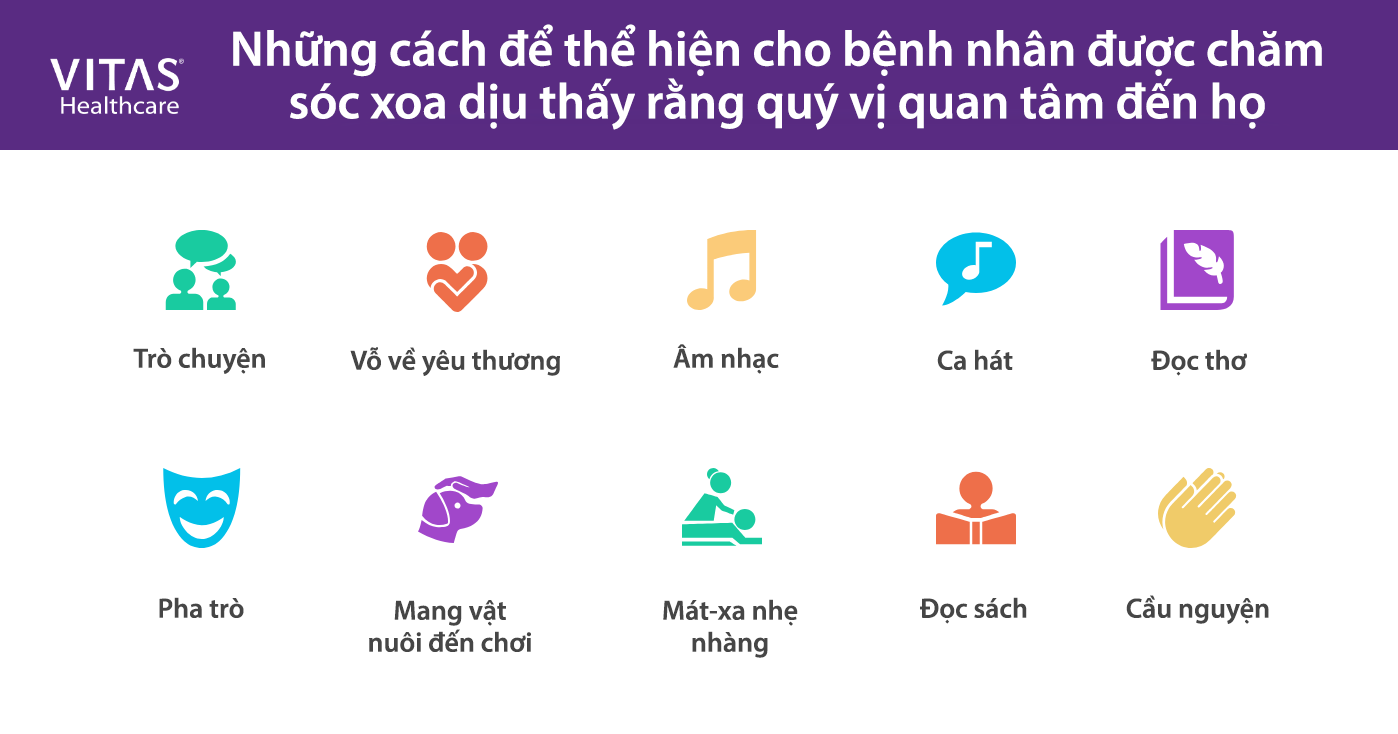
- If the patient can no longer eat or refuses to eat, provide alternative forms of support: conversation, loving touch, music, singing, poetry, humor, pet visits, gentle massage, reading, prayers or other acts of caring and love.
Craft and honor a compassionate end-of-life care plan
If your loved one can participate in a dialogue about goals of care, start having the conversation about their end-of-life wishes. The ideal time to craft an advance directive is when your loved one is healthy and able to speak their mind.
If a patient is no longer able to communicate their wishes, family members and a knowledgeable healthcare team will have to make the end-of-life decisions. The hospice team can help family members navigate the decision-making process. Các chuyên gia chăm sóc cuối đời thường đưa ra các hình thức chăm sóc và hỗ trợ cụ thể xung quanh vấn đề dinh dưỡng và cấp nước cho người thân của quý vị khi cái chết đang cận kề:
- The hospice team will continue to relieve pain and manage symptoms.
- The family’s personal, cultural and religious beliefs and values around nutrition and hydration will be honored.
- Family members and caregivers will be taught how to manage thirst and hunger compassionately in a patient’s final days of life.
- Trong những tuần lễ, ngày tháng và thời khắc cuối cùng, các gia đình sẽ luôn được trấn an rằng tình trạng suy giảm của bệnh nhân và cái chết cuối cùng là do diễn tiến bệnh tật tiềm ẩn chứ không phải là sự suy giảm tự nhiên và việc dừng ăn uống.